Nitrous oxide, the same gas that aids a meringue hold its shape and a delicious chocolate mousse stay wickedly light, has a serious side. In the cooking area, N2O is a workhorse propellant and foaming representative. Outside the kitchen area, it can be hazardously misconstrued. If you deal with whipped lotion dispensers in your home, run a coffee shop, or manage a bread program, you are accountable for knowing just how to deal with N2O cream chargers effectively. That means recognizing the law where you live, saving and using the battery chargers securely, and setting clear plans for your team.
I have actually trained baristas on 10-busy-hour days and bread cooks on the graveyard shift, and I've seen the best and the worst of cream battery charger techniques. Done right, these little steel cylinders make solution smoother and treats cleaner. Done incorrect, they create injuries, waste cash, and draw in the wrong type of attention. The objective right here is basic: keep your food superb, your people risk-free, and your operation on the appropriate side of the law.
What laughing gas does in the kitchen
Nitrous oxide liquifies into cream under pressure. When you press the bar on the dispenser, the stress drops and the gas broadens. The fat in the lotion develops an internet that traps bubbles, turning fluid cream into stable foam with tidy lines and consistent structure. Great battery chargers supply a foreseeable charge, so you can pipe rosettes, crown Irish coffee, or freshen a yuzu sabayon without fret. It's not simply whipped cream either. With the ideal bases, you can foam hollandaise, established tasty espumas, instill alcohols, or nitro-charge batters for ventilated waffles.
An appropriate cost issues. Inadequate gas, and your foam sputters. Excessive, and you blow big bubbles and streak the cream with fluid. Consistency calls for good dairy, a properly maintained dispenser, and battery chargers that meet spec for gas pureness and fill volume. That is where selecting the best brand name and storing the cartridges properly makes a quantifiable difference.
The difference between cream chargers and whipped lotion chargers
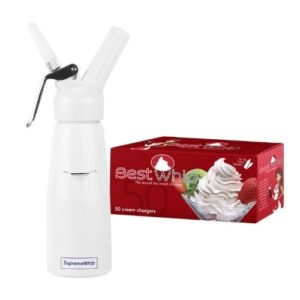
People make use of the phrases mutually. In practice, cream chargers, whipped cream chargers, N2O cream chargers, and Nitrous Oxide cream chargers all refer to the exact same thing: a tiny, sealed steel cartridge having pressurized nitrous oxide, usually 8 grams for home and coffee shop usage. Bigger systems exist, including 16-gram pills and refillable siphons running food-grade tanks, yet the security principles overlap.
If you're purchasing for a company, request for documents on food-grade pureness and residuals. Food-grade N2O needs to be free of oils, sulfur substances, and heavy metal residues that can pass on off tastes or infect your dispenser. Trusted producers publish set testing figures, frequently in parts per million. That openness is an eco-friendly flag.
Legal status and age restrictions
Nitrous oxide is legal for culinary usage in lots of countries, yet entertainment breathing and improper sale often fall under separate legislations. The information alter by nation, state, and even city. The pattern is consistent though: legislators aim to shield public wellness by restricting misuse while protecting legitimate cooking area use.
Here is what normally uses in numerous territories:
- Retailers are frequently needed to inspect ID and limit sales to grownups, frequently 18 or 21 and over. Supplying N2O for recreational inhalation is prohibited, sometimes with steep fines or perhaps criminal charges. Online vendors might require age verification steps and can not market chargers in a manner that encourages intoxication. Possession in particular public places, particularly occasions or celebrations, may be restricted. Transport and storage rules can exist for larger amounts, specifically for commercial operations.
Because regulations shift, validate specifics with your regional authority or industry organization. If you run across borders, deal with the most strict policy as your baseline. I have actually seen pop-up cafes get caught off guard when a city enforcement group inspected ID policies after a next-door neighbor whined. The shop had invoices and kitchen use, however no age-check treatment for retail sales. They repaired it rapidly, however the citation stung.
A liable getting policy
If you run a cafe or bakeshop, formalize exactly how you acquire and track chargers. You avoid compliance difficulty, and you keep stock limited. The system can be lightweight, but it requires 3 core components: supplier confirmation, age and advertising and marketing checks, and amount control.
Start with your supplier. Choose one that offers food-grade N2O and supplies clear security documentation. Legit suppliers describe their item as equipment for cooking usage, not as a recreational inhalant. Warning consist of item pictures revealing balloons, vernacular names, or evasive language around intended purpose.
Next, develop age limitations right into your procedure. Even if you just utilize battery chargers in the cooking area and do not market them retail, establish a plan that no one under your state's legal limit deals with or indications for deliveries. In multi-tenant kitchen areas with consultants, it's easy for chargers to end up being public. Require a named person to receive, shop, and issue stock.
Finally, match ordering tempo to production. Track how many battery chargers you use per change per dispenser. Overbuying welcomes loss and misplaced supply. In my experience, a stable cafe doing 150 specialty drinks a day and 40 dessert plates might take in 20 to 40 conventional chargers, relying on how boldy team purge the air and the amount of foams are real-time. When usage jumps for no apparent reason, explore. Normally it's a strategy issue: either overcharging a dispenser or airing vent half-filled canisters away at close.
Safe storage: little cylinders, large pressure
Treat battery chargers like any type of pressurized cyndrical tube. Store them in an awesome, dry area away from direct sunshine and away from ovens, recipe machines, or coffee central heating boilers. Heat increases internal stress, and while reputable chargers have robust burst resistances, they are not made to cook in a window.

Keep boxes off the floor and far from wetness so the steel coverings do not wear away. Do not stash them in the very same reach-in as acidic foods or open brine containers. Harsh vapors and high moisture are the adversaries of slim steel wall surfaces. If the cardboard obtains soaked or a sleeve shows corrosion flecks, draw those battery chargers from service and speak to the vendor.
If you keep more than a couple of cases on website, invest in a lockable closet. Besides deterring burglary, it signals that you deal with N2O as a regulated kitchen input. In many kitchen areas, knives reside in secured cabinets when not in use. Chargers are entitled to the very same respect.
Dispenser maintenance and gasket care
A tidy dispenser is a security gadget. Food deposit in the valve, dried cream in the nozzle, or a nicked gasket will certainly make a mess at best and a projectile at worst. Dismantle the head each night. Laundry the body and nozzles in hot, soapy water, after that wash and air completely dry. Do not place the head with the shutoff into a high-heat dish washer cycle unless the producer says it is risk-free for that model. High warmth warps plastic strings and can tense gaskets.
Check the head gasket and the piercing pin consistently. A deformed pin can pierce off-center and cause a leak around the charger collar. Food-grade silicone grease on the gasket, applied sparingly, maintains it supple and seated. Change gaskets on a routine timetable, not just when they fall short. I keep a tiny tackle box with extra gaskets, pointers, and a number of substitute shutoffs. Five minutes of upkeep on a slow mid-day beats mopping whipped lotion from the ceiling throughout the rush.
Proper charging technique
Charging a siphon is straightforward, however cutting edges triggers the majority of the mishaps I see. Here is a brief, field-tested series that maintains things tidy and predictable.
- Chill the lotion and the dispenser body. Cold lotion holds gas more effectively. Aim for fridge-cold, not half-frozen. Fill to the supplier's line, typically two-thirds to three-quarters full. Overfilling is a typical mistake that drives up stress and returns careless foam. Secure the head securely, yet do not crank it with body weight. If it binds, withdraw, straighten strings, and attempt again. Purge residual air by briefly pressing the lever before charging. You want gas dissolving in lotion, not pushing a pocket of air. Charge with the correct variety of cartridges for the quantity. For a one-pint siphon, one 8-gram charger is typical. For a one-quart siphon, 2 chargers are typical, added sequentially, trembling intensely after each.
Hold the siphon upright when charging, and invert it when giving. Shake basically, strong ruptureds, after that examine a small amount into a bowl. If the foam sputters or weeps fluid, you either undercharged, overfilled, or both. If the flow is also violent, you may have overcharged or the nozzle might be partly blocked. Clear the idea, shake once, and retest.
Why people abuse battery chargers and just how to avoid it
https://nitrousoxidecreamchargers.com.au/Recreational breathing is the dark darkness of this item classification. In expert kitchens, abuse tends ahead from 2 resources: unsafe supply that wanders outside the kitchen, and inquisitiveness among inexperienced personnel. The most effective avoidance is monotonous and effective: accountability plus education.
Staff demand to comprehend that breathing in laughing gas can cause oxygen deprivation, mishaps, frostbite injuries to the lips and throat, and long-lasting neurological troubles when over used, including B12 deficiency and neuropathy. Light fixtures have been pulled from ceilings by individuals who blacked out, and automobiles have actually been trashed seconds after a breathing. Those are not frighten stories. They are incident reports.
Create a composed policy that clearly prohibits non-culinary usage on site, assigns a gatekeeper for supply, and outlines consequences. Then educate the culinary purpose of the device, not just the rules. People regard equipment when they comprehend it. In my experience, the mix of training, a secured cupboard, and limited counts lowers misuse to near zero.
Recognizing and managing severe hazards
Most injuries entailing N2O cream chargers fall into three categories. Pressure-related occurrences, chilly burns from rapidly expanding gas, and messing up of damaged tools. Each has a predictable pattern and a tidy response.
Pressure events typically occur when a blocked nozzle is required or a warm dispenser is billed. If you really feel backpressure in the bar, quit. Do not aim it at a sink and press with more force. Initially, hemorrhage off stress securely by aiming right into a dish and gently pressing with a cloth over the nozzle. If the nozzle is totally obstructed, cover the head in a towel, remove the pointer, and clear the obstruction with warm water when pressure is decreased. Never ever try to loosen the head while the siphon is totally pressurized.
Cold burns take place when a person releases gas from a vacant or virtually vacant dispenser or holds a battery charger against the skin throughout slit. Gas expands and chills on launch. Make use of the protective sleeve that comes with most heads or put on a thin towel around the charger owner if the head lacks insulation. Do not touch the shutoff when hemorrhaging an empty cylinder. If a chilly burn takes place, treat it like a frostbite injury: cozy the area delicately, not with hot water, and look for medical analysis for severe cases.
Damaged devices gives off hints. Bent battery charger holders, cross-threaded heads, hairline splits in old light weight aluminum bodies. Retire questionable components. That twelve-dollar substitute collar is less expensive than a worker's compensation insurance claim. Maintain a log of identification numbers for dispensers if you run a multi-unit operation. When something goes wrong, you wish to know which unit and just how old it is.
Environmental responsibility and disposal
Empty battery chargers are steel, which suggests they are recyclable in numerous communities. The catch is verifying they are empty. Leak and air vent securely initially. The majority of kitchen area teams do this by totally discharging the siphon, eliminating the invested charger from the owner, and visually confirming the slit. You must still get in touch with your regional waste administration standards. Some programs ask that little steel cartridges be accumulated in a separate container to avoid them from failing arranging systems.
Do not toss partly made use of battery chargers. They are pressurized waste and can rupture in a compactor or vehicle. If you locate a partly used or questionable charger, separate it in an identified container and get in touch with the vendor for assistance. It is unusual, however I have actually received a short-fill batch that produced inconsistent outcomes and got replaced after a fast picture of the packaging and set code.
Choosing brand names and avoiding phony chargers
The N2O market has, at times, brought in imitations. Counterfeits can include contaminations or be over or under loaded. Both create performance issues and safety risks. Since a charger's guts are sealed, you judge by the exterior: tidy crimps, consistent weight, correct logo and set code placement, crisp packaging. If a situation is unusually low-cost, especially on the internet, assume it is too good to be true.
Buy from vendors who guarantee their product with traceable lot numbers. When a brand-new delivery arrives, evaluate a couple of battery chargers throughout preparation, not during solution. If you discover off-odors, oily residue in the owner, or extreme discharge, quit and call the vendor. Respectable providers choose one honest telephone call to twenty mad returns.
The line between cooking gases
Nitrous oxide is not carbon dioxide, and CARBON DIOXIDE is not N2. Each gas has different solubility and flavor effects. Carbon dioxide includes acidity and bite, fantastic for soft drink siphons and flash-chilling, but it undercuts dairy products foams. Nitrogen gives a luscious cascade in coffee and beer but does not liquify like N2O. Make use of the gas that fits the task. When people attempt to run a whipped lotion dispenser on carbon dioxide cartridges, they end up with sour, bubbly cream that breaks down. When they plug N2O into tools developed for nitrogen, they encounter overpressure problems and odd textures. The devices is labeled for a reason.
Practical dosing and expense control
A conventional 8-gram charger ought to whip about 0.5 litre of heavy cream into a generous yield of 1.5 to 2 litres of foam, relying on fat material and sugar stablizing. Milk fat matters. Cream in the 36 to 40 percent range holds framework and takes a tidy fee. Lower fat creams can work, but they require much more stabilizers and colder handling. If your foam preferences thin or leakages, begin with the lotion specification prior to grabbing an extra charger.
Sugar and alcohol impact foam security. A sweetened cream holds a much better form than simple, and a touch of alcohol can loosen framework if overused. For boozy desserts, keep alcohol volume in the base low, after that end up the beverage or plate with a separate spirit drizzle as opposed to trying to aerate a high-proof base.
Monitor waste at close. If your group is consistently airing vent half a siphon, you are shedding cash and setting up a health migraine in the drain. Smaller batch sizes take care of the problem. Whip 250 milliliters for sluggish periods, and maintain the larger set for peak service.
Temperature controls and food safety
Because N2O-charged foams are aerated, they can be microbial play grounds if left warm. Maintain your siphon cooled when not actively being used. If the head sits on a bar throughout service, use an ice bath or a cooled sleeve. Purpose to make use of dairy-based foams within the day. Some kitchen areas push to 2 days for stabilized lotions, but top quality fades and the threat rises. For egg-based foams like hollandaise or zabaglione versions, tighten the home window. Make fresh daily and dispose of leftovers. It is unworthy the gamble.
When you cleanse, break down every little thing that touched milk or eggs. Inspect the valve seat and the network under the bar. It is very easy to miss out on a tiny plug of cream that becomes a microbial starter culture overnight. If your dispenser smells off also after washing, saturate the head in a sanitizer recommended for food-contact tools, rinse thoroughly, and air completely dry fully before reassembly.
Training team the best way
I beginning with a short demo that shows cause and impact. We cool a siphon and make a small batch of sweetened cream with one charger. We evaluate the foam, then review what would certainly occur with a 2nd battery charger, or with cozy cream, or with an overfilled bottle. The group learns quicker by tasting and observing than by reviewing a laminated sheet. Afterwards, I assign certain duties. Someone is accountable for loading and logging chargers during a shift. An additional checks the gasket. Clear responsibility avoids nobody's-work syndrome.
If you have minors on staff in jurisdictions with age restrictions, keep battery chargers under guidance. Even if the legislation allows them to work in the kitchen area, your inner policy can still need a grown-up to take care of loading. Compose the guideline, clarify the why, and stay with it.
Insurance and documentation
Some insurance companies now inquire about controlled products and procedures in food services. If chargers appear on your plan list, answer with confidence. Show your created plan, your storage setup, and your training notes. If you are a high-volume operation utilizing large amounts, take into consideration a log for shipments and usage, comparable to how you track alcohol or crucial ingredients. The point is not security, it is evidence that you run a regimented shop.
Keep the user's manual for your dispensers in a binder with date-labeled purchase documents. When a gasket fails or a staffer fights with a stuck tip, a peek at the hand-operated conserves time. When you replace a head or upgrade to a more powerful version, note the date. If something stops working under service warranty, you will rejoice you kept those details tidy.
The values of advertising and marketing and retail sales
If you market battery chargers retail alongside coffee gear, you carry an honest responsibility along with a lawful one. Avoid symptomatic advertising and marketing that blurs the cooking purpose. Goods chargers alongside dispensers, recipe books, and quality dairy. Consist of a basic how-to recipe card that frameworks the product directly in the cooking area. Need age confirmation at checkout, also if it includes ten seconds to the deal. I have denied sales to clients who urged they did not need a dispenser. The short-term sale is not worth the long-term risk.

Community standards matter too. If your area has seen issues with nitrous abuse, belong to the option. Deal to brief local company teams on ideal practices, or companion with a cooking college to educate safe usage. Leadership in small points makes a dedicated client base.
A brief repairing clinic
When something feels off, approach it systematically. Too-wet foam indicate cozy lotion, overfilled container, or undercharging. Grainy or dry foam often implies overcharging or excessive stabilizer. Hissing from the battery charger holder suggests a damaged puncturing pin or a misaligned holder. Drips from the nozzle after dispensing suggest an unclean shutoff or a worn gasket. Fix the cause, not the sign. The worst fix is doubling down on gas to cover a method mistake. You may save one service, after that pay for it with a blown gasket and irregular texture for the next week.
If you are explore non-dairy bases, remember that plant fats and proteins act in a different way. Coconut cream foams perfectly when cold and lightly sweetened, however it separates if held warm. Oat and almond bases require stabilizers like methylcellulose or xanthan in small, well-tested amounts. Begin with tiny batches and document ratios. There is no embarassment in going back to the attracting board after an unsuccessful examination, but there is lots of pity in offering a crying foam.
What to inform consumers that ask the uncomfortable questions
Curiosity is not a criminal activity. When a visitor asks whether your cafe sells battery chargers for "parties," redirect carefully. Clarify that your battery chargers are strictly for cooking usage, that you require ID for retail sales, which the most safe method to take pleasure in whipped lotion at home is to acquire a dispenser with a charger package from a reputable cooking equipment store. If they push for balloons or ideas on inhalation, end the conversation and refuse the sale. Personnel require a succinct script and the authority to say no. Back them up every time.
The bottom line
N2O cream chargers are simple tools that open a globe of structure and speed in the cooking area. They are likewise regulated products with genuine risks when taken care of casually. Respect both truths. Purchase reputable, food-grade battery chargers, keep them trendy and safe and secure, maintain your dispensers with treatment, and keep a clear, written policy that covers age checks, training, and waste handling. Treat security like mise en place: carried out in advancement, duplicated often, and visible in your habits. When you do, your whipped cream will certainly be cleaner, your team calmer, and your company far better protected.